Showing posts with label Spain. Show all posts

Tuesday, 15 September 2020

SEVILLE, SPAIN

Seville is the capital and largest city of the autonomous community of Andalusia and the province of Seville, Spain. It is situated on the plain of the River Guadalquivir. The inhabitants of the city are known as sevillanos (feminine form: sevillanas) or hispalenses, after the Roman name of the city, Hispalis.

Seville has a municipal population of about 703,000 as of 2011, and a metropolitan population of about 1.5 million, making it the fourth-largest city in Spain and the 30th most populous municipality in the European Union. Its Old Town, the third largest in Europe with an area of 4 square kilometres, contains three UNESCO World Heritage Sites: The Alcázar palace complex, the Cathedral and the General Archive of the Indies.

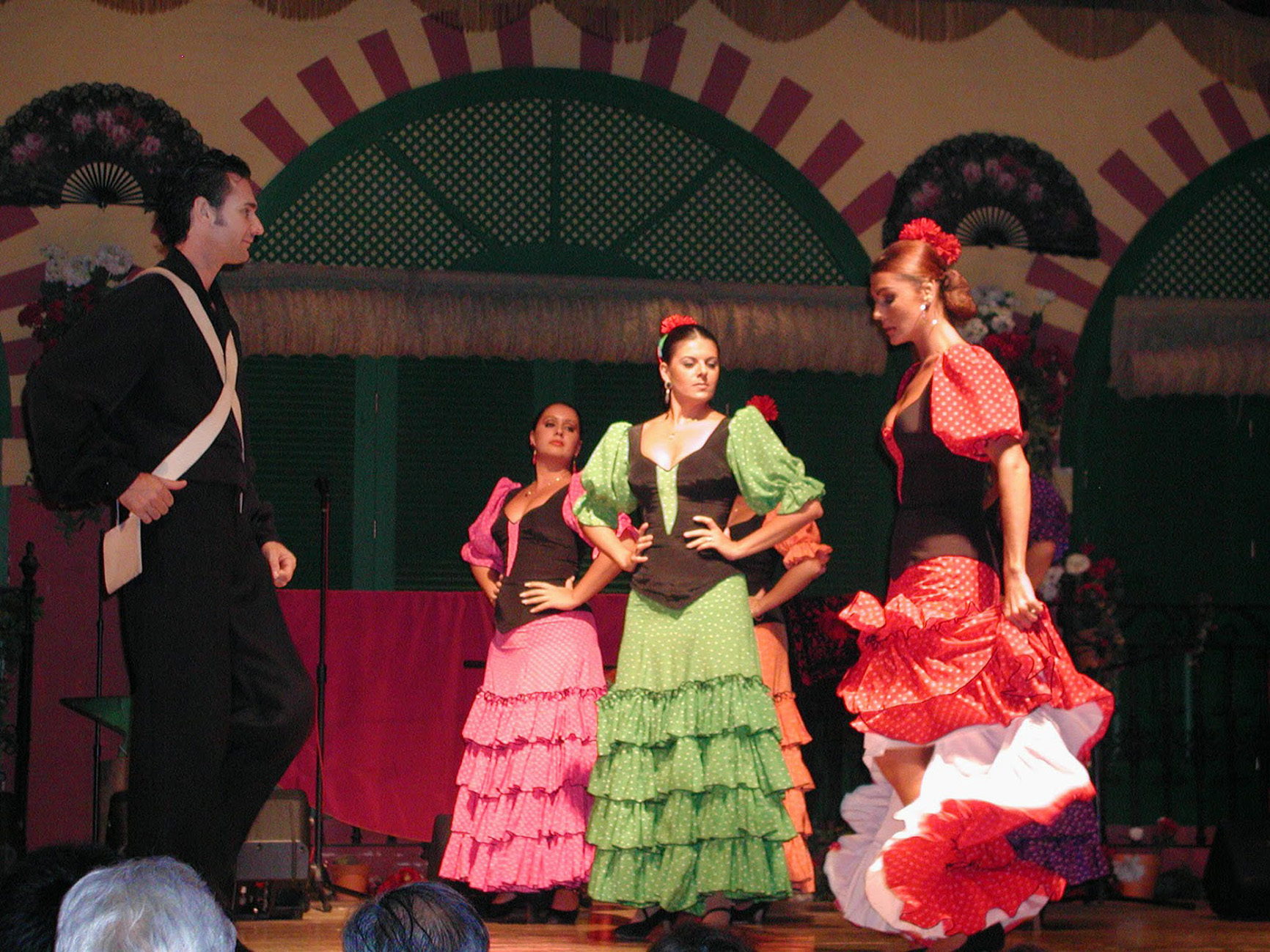
The Seville harbour, located about 80 kilometres from the Atlantic Ocean, is the only river port in Spain. When we visited there, one of the most memorable evenings was a stroll in the old town and then attendance at a flamenco dancing performance, which lived up to all of our expectations.

This post is part of the Our World Tuesday meme,
and also part of the Ruby Tuesday meme,
and also part of the Travel Tuesday meme,
and also part of the Wordless Wednesday meme.


Tuesday, 18 August 2020

PARK GÜELL, BARCELONA

The Park Güell (Catalan: Parc Güell) is a public park system composed of gardens and architectonic elements located on Carmel Hill, in Barcelona, Catalonia (Spain). Carmel Hill belongs to the mountain range of Collserola – the Parc del Carmel is located on the northern face. Park Güell is located in La Salut, a neighbourhood in the Gràcia district of Barcelona. With urbanisation in mind, Eusebi Güell assigned the design of the park to Antoni Gaudí, a renowned architect and the face of Catalan modernism.

The park was built between 1900 and 1914 and was officially opened as a public park in 1926. In 1984, UNESCO declared the park a World Heritage Site under “Works of Antoni Gaudí” Park Güell is the reflection of Gaudí’s artistic plenitude, which belongs to his naturalist phase (first decade of the 20th century). During this period, the architect perfected his personal style through inspiration from organic shapes. He put into practice a series of new structural solutions rooted in the analysis of geometry. To that, the Catalan artist adds creative liberty and an imaginative, ornamental creation.

Güell and Gaudí conceived this park, situated within a natural park. They imagined an organised grouping of high-quality homes, decked out with all the latest technological advancements to ensure maximum comfort, finished off with an artistic touch. They also envisioned a community strongly influenced by symbolism, since, in the common elements of the park, they were trying to synthesise many of the political and religious ideals shared by patron and architect: therefore there are noticeable concepts originating from political Catalanism – especially in the entrance stairway where the Catalonian countries are represented – and from Catholicism – the Monumento al Calvario, originally designed to be a chapel. The mythological elements are so important: Apparently Güell and Gaudí's conception of the park was also inspired by the Temple of Apollo of Delphi.

This post is part of the Our World Tuesday meme,
and also part of the Ruby Tuesday meme,
and also part of the Travel Tuesday meme,
and also part of the Wordless Wednesday meme.


Tuesday, 17 December 2019

VALENCIA, SPAIN

Valencia on the east coast of Spain, is the capital of the autonomous community of Valencia and the third-largest city in Spain after Madrid and Barcelona, with around 800,000 inhabitants in the administrative centre. Valencia is Spain’s third largest metropolitan area, with a population ranging from 1.7 to 2.5 million depending on how the metropolitan area is defined.

Valencia was the capital of Spain when Joseph Bonaparte moved the Court there in the summer of 1812. It also served as capital between 1936 and 1937, during the Second Spanish Republic. The city is situated on the banks of the Turia, on the east coast of the Iberian Peninsula, fronting the Gulf of Valencia on the Mediterranean Sea. Its historic centre is one of the largest in Spain, with approximately 169 ha (420 acres); this heritage of ancient monuments, views and cultural attractions makes Valencia one of the country's most popular tourist destinations.

Due to its long history, this is a city with numerous popular celebrations and traditions, such as the Fallas (when you can taste the traditional Spanish dish paella), which were declared as Fiestas of National Tourist Interest of Spain in 1965 and Intangible cultural heritage by UNESCO in November 2016. In 2015, Joan Ribó, from Coalició Compromís, became mayor.

This post is part of the Our World Tuesday meme,
and also part of the Travel Tuesday meme,
and also part of the Wordless Wednesday meme.

Wednesday, 13 November 2019

SINGER SARGENT'S SPAIN AT THE SALON

John Singer Sargent (January 12, 1856 – April 14, 1925)[1] was an American expatriate artist, considered the "leading portrait painter of his generation" for his evocations of Edwardian-era luxury. He created roughly 900 oil paintings and more than 2,000 watercolors, as well as countless sketches and charcoal drawings. His oeuvre documents worldwide travel, from Venice to the Tyrol, Corfu, the Middle East, Montana, Maine, and Florida.

Here is his "El Jaleo (Spanish Dancer)", c. 1879–82, Isabella Stewart Gardner Museum in Boston, USA. His evocation of Spain through images of Spanish dancing and music is very effective. The painting was inspired by a five-month trip Sargent made through Spain and North Africa in 1879, which also yielded a smaller oil painting, "The Spanish Dance" (Hispanic Society of America).

After the initial exhibition of El Jaleo in 1882 at the French Salon, John Singer Sargent became, as one writer put it, "the most talked-about painter in Paris." Some critics in 1882 said that the painting caused Sargent to join the ranks of the French Impressionists. A critic for the Le Figaro called the painting "one of the most original and strongest works of the present Salon." Some writers hailed the painting as clever, while others dismissed it as a vagary of the artist. Today El Jaleo is considered to be one of John Singer Sargent's most memorable works.

This post is part of the ABC Wednesday meme,
and also part of the Wordless Wednesday meme.

Monday, 8 April 2019

SEGOVIA, SPAIN

Segovia is a city in the autonomous region of Castile and León, Spain. The city is famous for its historical buildings and for three main landmarks: Its magnificent Roman aqueduct, its cathedral, one of the last Gothic temples to be built in Europe, and the castle, which was an influence for Walt Disney's Cinderella Castle. The city centre of Segovia was declared World Heritage by the Unesco in 1985. It is the capital of Province of Segovia.

This post is part of the Mosaic Monday meme,
and also part of the Blue Monday meme,
and also part of the Through my Lens meme,
and also part of the Seasons meme.

Tuesday, 25 September 2018

SANTA CRUZ, TENERIFE

Santa Cruz de Tenerife (commonly abbreviated as Santa Cruz) is a major city, capital of the island of Tenerife, Province of Santa Cruz de Tenerife, and capital (jointly with Las Palmas) of the Canary Islands. Santa Cruz has a population of 206,593 (2013) within its administrative limits. The urban zone of Santa Cruz extends beyond the city limits with a population of 507,306 and 538,000 within urban area. It is the second largest city in the Canary Islands and the main city on the island of Tenerife, with nearly half of the island's population living in or around it.

Santa Cruz is located in the northeast quadrant of Tenerife, 210 kilometres off the northwestern coast of Africa within the Atlantic Ocean. The distance to the nearest point of mainland Spain is 1,300 kilometres. Between the 1833 territorial division of Spain and 1927, Santa Cruz de Tenerife was the sole capital of the Canary Islands, until 1927 when a decree ordered that the capital of the Canary Islands be shared, as it remains at present. The port is of great importance and is the communications hub between Europe, Africa and Americas, with cruise ships arriving from many nations. The city is the focus for domestic and inter-island communications in the Canary Islands.

The main landmarks of the city include the Auditorio de Tenerife (Auditorium of Tenerife), the Santa Cruz Towers (Torres de Santa Cruz) and the Iglesia de la Concepción. Santa Cruz de Tenerife hosts the first headquarters of the Center UNESCO in the Canary Islands. In recent years the city of Santa Cruz de Tenerife has seen the construction of a significant number of modern structures and the city's skyline is the sixth in height across the country, behind Madrid, Benidorm, Barcelona, Valencia and Bilbao. In 2012, the British newspaper 'The Guardian' included Santa Cruz de Tenerife in the list of the five best places in the world to live. The 82% of the municipal territory of Santa Cruz de Tenerife is considered a natural area, this is due in large part to the presence of the Anaga Rural Park.

This post is part of the Our World Tuesday meme,
and also part of the Ruby Tuesday meme,
and also part of the Travel Tuesday meme,
and also part of the Wordless Wednesday meme.

Wednesday, 5 September 2018

IBIZA, SPAIN

Ibiza (Catalan: Eivissa) is an island in the Mediterranean Sea off the eastern coast of Spain. It is 150 kilometres (93 miles) from the city of Valencia. It is the third largest of the Balearic Islands, an autonomous community of Spain. Its largest settlements are Ibiza Town (Catalan: Vila d'Eivissa, or simply Vila), Santa Eulària des Riu, and Sant Antoni de Portmany. Its highest point, called Sa Talaiassa (or Sa Talaia), is 475 metres (1,558 feet) above sea level.

Ibiza has become well known for its association with nightlife, electronic dance music that originated on the island, and for the summer club scene, all of which attract large numbers of tourists drawn to that type of holiday. Several years before 2010, the island's government and the Spanish Tourist Office had been working to promote more family-oriented tourism, with the police closing down clubs that played music at late night hours, but by 2010 this policy was reversed. Around 2015 it was resumed. Ibiza is a UNESCO World Heritage Site.[3] Ibiza and the nearby island of Formentera to its south are called the Pine Islands, or "Pityuses".

This post is part of the Wordless Wednesday meme,
and also part of the ABC Wednesday meme,
and also part of the Travel Tuesday meme.

Tuesday, 12 June 2018

CÁDIZ, SPAIN

Cádiz is a city and port in southwestern Spain. It is the capital of the Province of Cádiz, one of eight which make up the autonomous community of Andalusia. Cádiz, regarded by many as the oldest continuously inhabited city in Western Europe, with archaeological remains dating to 3100 years, was founded by the Phoenicians. It has been a principal home port of the Spanish Navy since the accession of the Spanish Bourbons in the 18th century. The city is a member of the Most Ancient European Towns Network. It is also the site of the University of Cádiz.

Situated on a narrow slice of land surrounded by the sea‚ Cádiz is, in most respects, a typically Andalusian city with a wealth of attractive vistas and well-preserved historical landmarks. The older part of Cádiz within the remnants of the city walls is commonly referred to as the Old Town (Spanish: Casco Antiguo). It is characterized by the antiquity of its various quarters (barrios), among them El Pópulo, La Viña, and Santa María, which present a marked contrast to the newer areas of town.

While the Old City's street plan consists of narrow winding alleys connecting large plazas, newer areas of Cádiz typically have wide avenues and more modern buildings. In addition, the city is dotted with numerous parks where exotic plants flourish, including giant trees supposedly brought to Spain by Columbus from the New World.

This post is part of the Our World Tuesday meme,
and also part of the Ruby Tuesday meme,
and also part of the Travel Tuesday meme,
and also part of the Wordless Wednesday meme.

Tuesday, 20 February 2018

SALAMANCA, SPAIN

Salamanca is a city in northwestern Spain that is the capital of the Province of Salamanca in the community of Castile and León. The city lies on several hills by the Tormes River. Its Old City was declared a UNESCO World Heritage Site in 1988. With a metropolitan population of 228,881 in 2012 according to the National Institute of Statistics (INE), Salamanca is the second most populated urban area in Castile and León, after Valladolid (414,000), and ahead of León (187,000) and Burgos (176,000).

It is one of the most important university cities in Spain and supplies 16% of Spain's market for the teaching of the Spanish language. Salamanca attracts thousands of international students. It is situated approximately 200 kilometres west of the Spanish capital Madrid and 80 km east of the Portuguese border.

The University of Salamanca, which was founded in 1218, is the oldest university in Spain and the fourth oldest western university, but the first to be given its status by the Pope Alexander IV who gave universal validity to its degrees. With its 30,000 students, the university is, together with tourism, a primary source of income in Salamanca. It is on the Via de la Plata path of the Camino de Santiago.

This post is part of the Our World Tuesday meme,
and also part of the Ruby Tuesday meme,
and also part of the Travel Tuesday meme,
and also part of the Wordless Wednesday meme.

Tuesday, 20 December 2016

ALCÁZAR OF CORDOBA, SPAIN

The Alcázar de los Reyes Cristianos (Spanish for "Alcázar of the Christian Monarchs"), also known as the Alcázar of Córdoba, is a medieval Alcázar located in the historic centre of Córdoba, Spain next to the Guadalquivir River and near the Grand Mosque. The Alcázar takes its name from the Arabic word القصر (Al-Qasr, meaning "the Palace"). The fortress served as one of the primary residences of Isabella I of Castile and Ferdinand II of Aragon.

In early medieval times, the site was occupied by a Visigoth fortress. When the Visigoths fell to the Umayyad conquest of Hispania, the emirs of the Umayyad Caliphate in Damascus rebuilt the structure. The Umayyads fell to the Abbasid Caliphate and the surviving member of the Umayyad Dynasty, Abd ar-Rahman I, fled to Córdoba. Abd ar-Rahman I's successors established the independent Caliphate of Córdoba and used the Alcázar as their palace. The city subsequently flourished as an important political and cultural center, and the Alcázar was expanded to a very large compound with baths, gardens, and the largest library in the West. Watermills on the nearby Guadalquivir powered water lifting to irrigate the extensive gardens.

This post is part of the Our World Tuesday meme,
and also part of the Ruby Tuesday meme,
and also part of the Travel Tuesday meme,
and also part of the Wordless Wednesday meme.




Tuesday, 23 August 2016

PLAZA DE CIBELES, MADRID

The Plaza de Cibeles is a square with a neo-classical complex of marble sculptures with fountains that has become an iconic symbol for the city of Madrid. It sits at the intersection of Calle de Alcalá (running from east to west), Paseo de Recoletos (to the North) and Paseo del Prado (to the south). Plaza de Cibeles was originally named Plaza de Madrid, but in 1900, the City Council named it Plaza de Castelar, which was eventually replaced by its current name.

It is currently delimited by four prominent buildings: The Bank of Spain, the Palacio de Buenavista, the Palacio de Linares and the Cybele Palace. These constructions are located in four different neighbourhoods from three different adjacent districts: Centro, Retiro and Salamanca. In the years Cybele Palace and her fountain have become symbolic monuments of the city.

The Fountain of Cybele is found in the part of Madrid commonly called the Paseo de Recoletos. This fountain is named after Cybele, a Phrygian goddess who had a significant cult in Rome, and is seen as one of Madrid's most important symbols. The fountain depicts the goddess, sitting on a chariot pulled by two lions. The fountain was built in the reign of Charles III and designed by Ventura Rodríguez between 1777 and 1782.

The goddess and chariot are the work of Francisco Gutiérrez and the lions by Roberto Michel. The fountain originally stood next to the Buenavista Palace, and was moved to its present location in the middle of the square in the late 19th century. Up until the 19th century both the fountain of Neptune and Cybele looked directly at each other, until the city council decided to turn them round to face towards the centre of the city.

ths post is part of the Our World Tuesday meme,
and also part of the Travel Tuesday meme,
and also part of the Wordless Wednesday meme.