Tuesday, 9 August 2016

LEIDEN, NETHERLANDS

Leiden is a city and municipality in the Dutch province of South Holland. The municipality of Leiden has a population of 122,565, but the city forms one densely connected agglomeration with its suburbs Oegstgeest, Leiderdorp, Voorschoten and Zoeterwoude with around 190,000 inhabitants. Leiden is located on the Old Rhine, at a distance of some 20 kilometres from The Hague to its south and some 40 km from Amsterdam to its north. The recreational area of the Kaag Lakes (Kagerplassen) lies just to the northeast of Leiden.

A university city since 1575, Leiden houses Leiden University, the oldest university of the Netherlands, and Leiden University Medical Centre. It is twinned with Oxford, the location of the United Kingdom's oldest university. 

Over 1994/95 I spent several months in the Netherlands engaged in various academic/research activities. I lived in Leiden for five weeks, which was a wonderful time for me. I spent a great deal of my spare time cycling around the city and environs visiting the grand old buildings, notable museums, beauty spots and historical sites.

This post is part of the Our World Tuesday meme,
and also part of the Ruby Tuesday meme,
and also part of the Trees & Bushes meme,
and also part of the Travel Tuesday meme,
and also part of the Wordless Wednesday meme.


Sunday, 7 August 2016

FUN AT THE LAKE

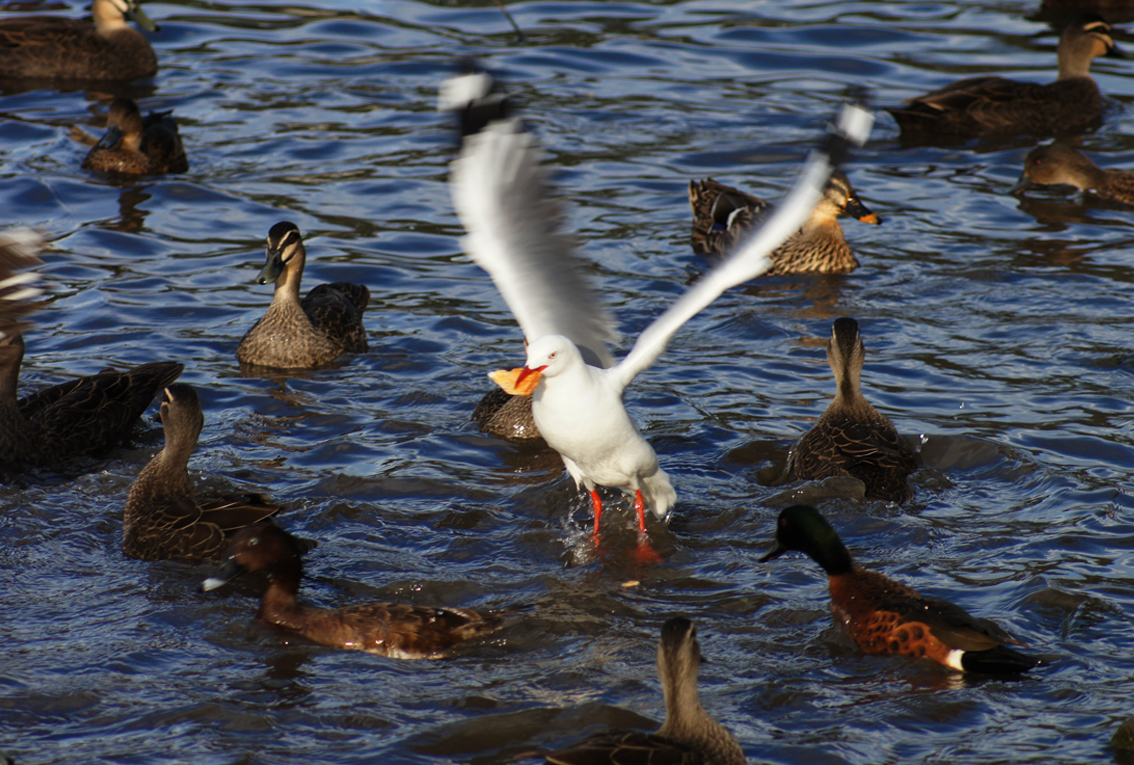
Merri Creek flows about 60 km from the Great Dividing Range through Melbourne’s northern suburbs to the Yarra River. Merri Creek is an environmental, heritage and recreation corridor that draws its significance from its role as a continuous corridor as it does from the qualities of individual reaches. All areas of the Creek are important because they contribute to the linking of areas of environmental, heritage and recreational value along the Creek. At Coburg, one of Melbourne's northern suburbs, the creek has been dammed to form a lake.

This post is part of the Scenic Weekends meme,
and also part of the Our Beautiful World meme,
and also part of the My Sunday Photo meme.


Saturday, 6 August 2016

SUNSET PALMS

Dunk Island in Queensland, Australia, fulfils all of the criteria for a tropical paradise, including the magical sunsets under the palms...

This post is part of the Skywatch Friday meme,
and also part of the Orange you Glad It's Friday meme,
and also part of the Saturday Silhouettes meme.

Friday, 5 August 2016

FRIDAY GREENS #83 - BILLIARDS

Welcome to this meme active every Friday. The theme is "Friday Greens" and you can post images, art, photos where the predominant colour is GREEN!
GREEN is the colour between blue and yellow in the spectrum; coloured like grass or emeralds.
English billiards, called simply billiards in Great Britain, where it originated, and in many former British colonies, is a cue sport for two players or teams. Two cue balls (originally both white and one marked e.g. with a black dot, but more recently one white, one yellow) and a red object ball are used. Each player or team uses a different cue ball. It is played on a billiards table with the same dimensions as a snooker table and points are scored for cannons and pocketing the balls. English billiards has also, but less frequently, been referred to as "the English game", "the all-in game" and (formerly) "the common game".
If you take part in this meme:
  • Please link back to this page from your blog, with the Friday Greens logo or link text;
  • In the spirit of community, please visit other participants to see their photos and leave a comment;
  • Say hello here in the comments box, which is always appreciated!

Thursday, 4 August 2016

MAGNOLIA IN FLOWER

Magnolia × soulangeana (saucer magnolia) is a hybrid plant in the genus Magnolia and family Magnoliaceae. It is a deciduous tree with large, early-blooming flowers in various shades of white, pink, and purple. It is one of the most commonly used magnolias in horticulture, being widely planted in the British Isles, especially in the south of England; in the United States, especially the east and west coasts, in the Southern parts of Australia and in New Zealand.

Magnolia × soulangeana was initially bred by French plantsman Étienne Soulange-Bodin (1774–1846), a retired cavalry officer in Napoleon's army, at his château de Fromont near Paris. He crossed Magnolia denudata with M. liliiflora in 1820, and was impressed with the resulting progeny's first precocious flowering in 1826. From France, the hybrid quickly entered cultivation in England and other parts of Europe, and also North America. Since then, plant breeders in many countries have continued to develop this magnolia, and over a hundred named horticultural varieties (cultivars) are now known.

Growing as a multistemmed large shrub or small tree, Magnolia × soulangeana has alternate, simple, shiny, dark green oval-shaped leaves on stout stems. Its flowers emerge dramatically on a bare tree in early spring, with the deciduous leaves expanding shortly thereafter, lasting through summer until autumn. Magnolia × soulangeana flowers are large, commonly 10–20 cm across, and coloured various shades of white, pink, and maroon.

An American variety, 'Grace McDade' from Alabama, is reported to bear the largest flowers, with a 35 cm, white tinged with pinkish-purple. Another variety, Magnolia × soulangeana 'Jurmag1', is supposed to have the darkest and tightest flowers. The exact timing and length of flowering varies between named varieties, as does the shape of the flower. Some are globular, others a cup-and-saucer shape.

This post is part of the Floral Friday Fotos meme,
and also part of the Skywatch Friday meme.


Tuesday, 2 August 2016

SKOPELOS, GREECE

Skopelos (Greek: Σκόπελος) is a Greek island in the western Aegean Sea. Skopelos is one of several islands which comprise the Northern Sporades island group, which lies east of the Pelion peninsula on the mainland and north of the island of Euboea. It is part of the Thessaly region. Skopelos is also the name of the main port and the municipal centre of the island. The other communities of the island are Glossa and Neo Klima (Elios).

The geography of Skopelos includes two mountains over 500 m; Delphi (681 m) in the centre of the island, and Palouki (546 m) in the southeast. With an area of 96 square kilometres, Skopelos is slightly larger than Mykonos (85 km2) and Santorini (73 km2). The nearest inhabited islands are Skiathos to the west and Alonissos to the east.

According to legend, Skopelos was founded by Staphylos (Greek for grape), one of the sons of the god Dionysos and the princess Ariadne of Crete. Historically, in the Late Bronze Age the island, then known as Peparethos or Peparethus (Ancient Greek: Πεπάρηθος), was colonised by Cretans, who introduced viticulture to the island. Perhaps because of the legend of its founding by the son of the god of wine, the island was known throughout the ancient Greek cities of the Mediterranean Sea for its wine. The play "Philoctetes" (first performed at the Festival of Dionysus in 409 BC) by Sophocles includes a wine merchant lost on his way to "Peparethos, rich in grapes and wine".

The economy of Skopelos is now fully dependent on the tourism industry which supports construction and other development-related industries. Though tourism is greatest during the summer months, Skopelos is also a year round retirement destination for Northern Europeans. The popularity of the island with tourists increased due to the filming of "Mamma Mia!" on the island in September 2007.

This post is part of the Our World Tuesday meme,
and also part of the Ruby Tuesday meme,
and also part of the Trees & Bushes meme,
and also part of the Travel Tuesday meme,
and also part of the Wordless Wednesday meme.


Friday, 29 July 2016

FRIDAY GREENS #82 - KALE CABBAGE

Welcome to this meme active every Friday. The theme is "Friday Greens" and you can post images, art, photos where the predominant colour is GREEN!

GREEN is the colour between blue and yellow in the spectrum; coloured like grass or emeralds.

Brassica oleracea is the species of plant in the family Brassicaceae that includes many common foods as cultivars, including cabbage, broccoli, cauliflower, kale, Brussels sprouts, collard greens, savoy, kohlrabi and kai-lan. In its uncultivated form, it is known as wild cabbage. It is native to coastal southern and western Europe. Its high tolerance of salt and lime and its intolerance of competition from other plants typically restrict its natural occurrence to limestone sea cliffs.
If you take part in this meme:
  • Please link back to this page from your blog, with the Friday Greens logo or link text;
  • In the spirit of community, please visit other participants to see their photos and leave a comment;
  • Say hello here in the comments box, which is always appreciated!

Thursday, 28 July 2016

BANKSIA COCCINEA

Banksia coccinea, commonly known as the scarlet banksia, waratah banksia or Albany banksia, is an erect shrub or small tree in the family Proteaceae. Endemic to south west Western Australia, it occurs from Denmark to the Stokes National Park, and north to the Stirling Range, growing on white or grey sand in shrubland, heath or open woodland.

Reaching up to 8 m in height, it is a single-stemmed plant that has oblong leaves, which are 3–9 cm long and 2–7 cm wide. The prominent red and white flower spikes appear mainly in the spring. As they age they develop small follicles that store seeds until opened by fire. Though widely occurring, it is highly sensitive to dieback and large populations of plants have succumbed to the disease. Collected and described by Robert Brown in the early 19th century, Banksia coccinea appears to be most closely related to Banksia speciosa and B. baxteri.

Banksia coccinea plants are killed by bushfire, and regenerate from seed. The flowers attract nectar- and insect-feeding birds, particularly honeyeaters, and a variety of insects. Widely considered one of the most attractive Banksia species, B. coccinea is a popular garden plant and one of the most important Banksia species for the cut flower industry; it is grown commercially in several countries including Australia, South Africa, Canada, the United States, New Zealand and Israel. In cultivation, B. coccinea grows well in a sunny location on well-drained soil, but it cannot survive in areas with humid or wet summers.

This post is part of the Floral Friday Fotos meme.