Showing posts with label Magnoliaceae. Show all posts

Thursday, 26 August 2021

MAGNOLIA

This spectacular magnolia hybrid is blooming at the moment in a neighbour's garden. The large, showy, magenta blossoms are certainly an eye-catcher!

This post is part of the Floral Friday Fotos meme.


Sunday, 6 September 2020

MAGNOLIA & BEE

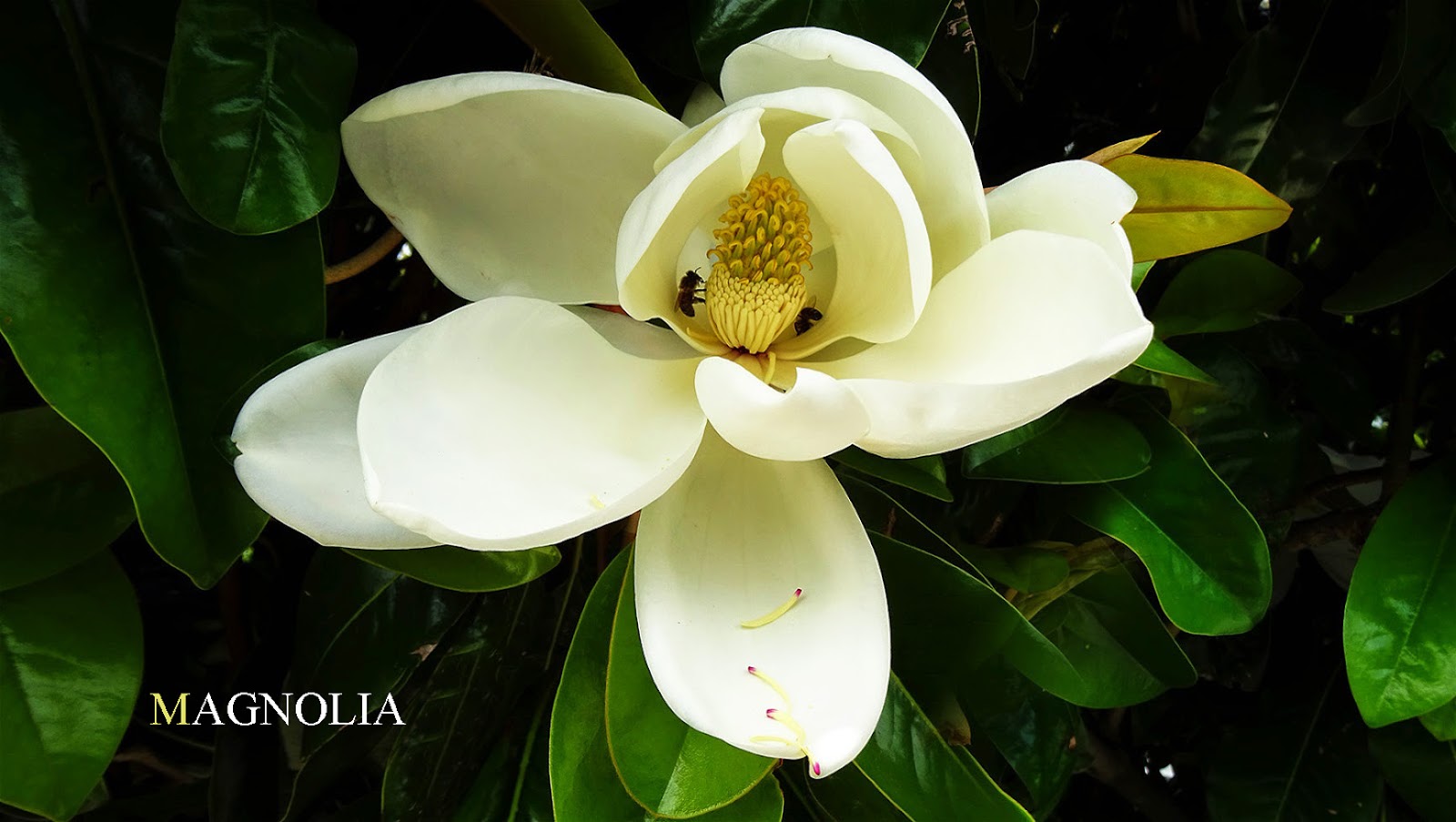
Magnolia grandiflora, commonly known as the southern magnolia or bull bay, is a tree of the family Magnoliaceae native to the southeastern United States, from Virginia south to central Florida, and west to eastern Texas and Oklahoma. Some trees have been viewed as far west as New Mexico and California. Reaching 27.5 m in height, it is a large striking evergreen tree with large dark green leaves and large white fragrant flowers. Widely cultivated around the world, over a hundred cultivars have been bred and marketed commercially. The timber is hard and heavy, and has been used commercially to make furniture, pallets, and veneer.

This post is part of the My Sunday Best meme.

Thursday, 26 December 2019

TULIP TREE

Liriodendron tulipifera (known as the tulip tree, American tulip tree, tuliptree, tulip poplar, whitewood, fiddle-tree, and yellow poplar) is the Western Hemisphere representative of the two-species genus Liriodendron, and the tallest eastern hardwood. It is native to eastern North America from Southern Ontario and Illinois eastward across southern New England and south to central Florida and Louisiana.

It can grow to more than 50 m in virgin cove forests of the Appalachian Mountains, often with no limbs until it reaches 25–30 m in height, making it a very valuable timber tree. It is fast-growing, without the common problems of weak wood strength and short lifespan often seen in fast-growing species. April marks the start of the flowering period in the southern USA; trees at the northern limit of cultivation begin to flower in June. Surprisingly, the flower-bearing branches make good cut flower displays.

The flowers are pale green or yellow (rarely white), with an orange band on the tepals; they yield large quantities of nectar. The tulip tree is the state tree of Indiana, Kentucky, and Tennessee. Tulip trees make magnificently shaped specimen trees, but are very large, growing to about 35 m in good soil. Liriodendron tulipifera has been introduced to many temperate parts of the world, at least as far north as Sykkylven, Norway.

This post is part of the Floral Friday Fotos meme.

Wednesday, 4 April 2018

MAGNOLIA

Magnolia grandiflora, commonly known as the southern magnolia or bull bay, is a tree of the family Magnoliaceae native to the southeastern United States, from Virginia south to central Florida, and west to East Texas and Oklahoma. Reaching 28 m in height, it is a large, striking, evergreen tree with large, dark green leaves up to 20 cm long and 12 cm wide, and large, white, fragrant flowers up to 30 cm in diameter.

Widely cultivated in warmer areas around the world, over 50 cultivars have been bred and marketed commercially. The timber is hard and heavy, and has been used commercially to make furniture, pallets, and veneer. The climate in Melbourne suits this tree very well and there are many fine specimens in gardens, parks, streets and reserves. Once established, the trees are drought tolerant, and are indeed the most drought tolerant of all the Magnolia species.

This post is part of the Wordless Wednesday meme,
and also part of the ABC Wednesday meme.

Thursday, 12 January 2017

MAGNOLIA

Magnolia is a large genus of about 210 flowering plant species in the family Magnoliaceae. It is named after French botanist Pierre Magnol. Magnolia is an ancient genus. Appearing before bees did, the flowers are theorised to have evolved to encourage pollination by beetles. To avoid damage from pollinating beetles, the carpels of Magnolia flowers are extremely tough.

Fossilised specimens of M. acuminata have been found dating to 20 million years ago, and of plants identifiably belonging to the Magnoliaceae date to 95 million years ago. Another aspect of Magnolia considered to represent an ancestral state is that the flower bud is enclosed in a bract rather than in sepals; the perianth parts are undifferentiated and called tepals rather than distinct sepals and petals. Magnolia shares the tepal characteristic with several other flowering plants near the base of the flowering plant lineage such as Amborella and Nymphaea (as well as with many more recently derived plants such as Lilium).

The natural range of Magnolia species is a disjunct distribution, with a main centre in east and southeast Asia and a secondary centre in eastern North America, Central America, the West Indies, and some species in South America.

Magnolia virginiana, is most commonly known as sweetbay magnolia, or merely sweetbay (also laurel magnolia, swampbay, swamp magnolia, whitebay, or beaver tree) and shown here. It was the first magnolia to be scientifically described under modern rules of botanical nomenclature, and is the type species of the genus Magnolia.

This post is part of the Floral Friday Fotos meme.

Thursday, 4 August 2016

MAGNOLIA IN FLOWER

Magnolia × soulangeana (saucer magnolia) is a hybrid plant in the genus Magnolia and family Magnoliaceae. It is a deciduous tree with large, early-blooming flowers in various shades of white, pink, and purple. It is one of the most commonly used magnolias in horticulture, being widely planted in the British Isles, especially in the south of England; in the United States, especially the east and west coasts, in the Southern parts of Australia and in New Zealand.

Magnolia × soulangeana was initially bred by French plantsman Étienne Soulange-Bodin (1774–1846), a retired cavalry officer in Napoleon's army, at his château de Fromont near Paris. He crossed Magnolia denudata with M. liliiflora in 1820, and was impressed with the resulting progeny's first precocious flowering in 1826. From France, the hybrid quickly entered cultivation in England and other parts of Europe, and also North America. Since then, plant breeders in many countries have continued to develop this magnolia, and over a hundred named horticultural varieties (cultivars) are now known.

Growing as a multistemmed large shrub or small tree, Magnolia × soulangeana has alternate, simple, shiny, dark green oval-shaped leaves on stout stems. Its flowers emerge dramatically on a bare tree in early spring, with the deciduous leaves expanding shortly thereafter, lasting through summer until autumn. Magnolia × soulangeana flowers are large, commonly 10–20 cm across, and coloured various shades of white, pink, and maroon.

An American variety, 'Grace McDade' from Alabama, is reported to bear the largest flowers, with a 35 cm, white tinged with pinkish-purple. Another variety, Magnolia × soulangeana 'Jurmag1', is supposed to have the darkest and tightest flowers. The exact timing and length of flowering varies between named varieties, as does the shape of the flower. Some are globular, others a cup-and-saucer shape.

This post is part of the Floral Friday Fotos meme,
and also part of the Skywatch Friday meme.


Thursday, 14 August 2014

MAGNOLIA FLOWER

Magnolia stellata, sometimes called the star magnolia, is a slow-growing shrub or small tree native to Japan. It bears large, showy white or pink flowers in early spring, before its leaves open. This species is closely related to the Kobushi magnolia (Magnolia kobus), and is treated by many botanists as a variety or even a cultivar of that. However, Magnolia stellata was accepted as a distinct species in the 1998 monograph by D. Hunt.

This post is part of the Floral Friday Fotos meme.