Showing posts with label New_Zealand. Show all posts

Sunday, 19 April 2020

BLUFF, NZ

Bluff is a town and seaport in the Southland region, on the southern coast of the South Island of New Zealand. It is the southern-most town in New Zealand (excluding Oban) and, despite Slope Point being further to the south, is colloquially used to refer to the southern extremity of the country (particularly in the phrase "from Cape Reinga to The Bluff"). According to the 2006 census, the usually resident population was 1,850, a decrease of 85 since 2001.

This post is part of the My Sunday Best meme.

Friday, 27 September 2019

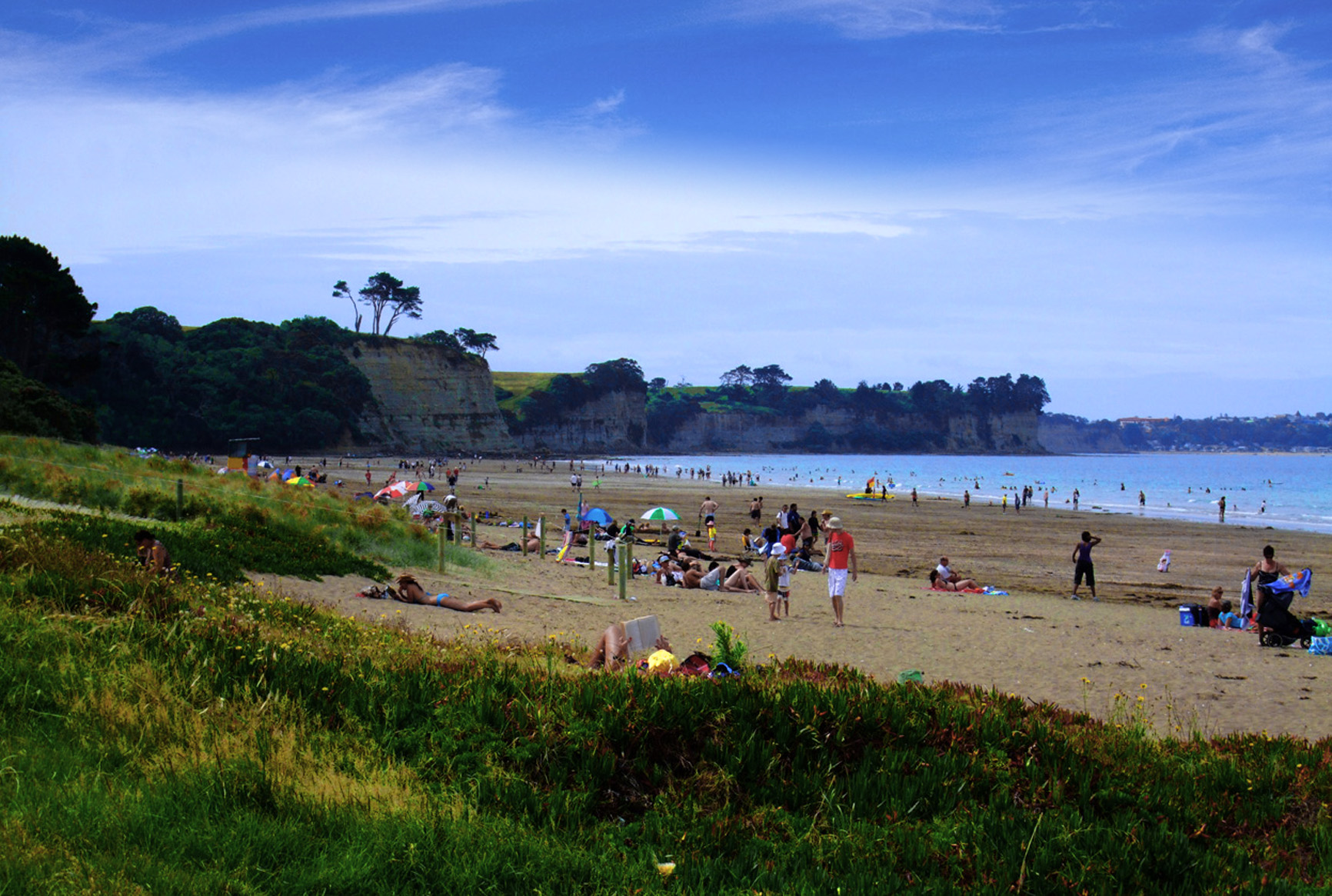
LONG BAY, NZ

Long Bay-Okura Marine Reserve protects a stretch of coastline on the east coast just north of Auckland city in New Zealand. The shores and waters of the reserve include a diversity of coastal habitats – the sandy beaches of Long Bay and Karepiro Bay; the rocky reefs off the two headlands at either end of Long Bay; and the sandflats and mudflats of the Okura River and estuary. Excellent public access and car parking facilities are found at adjacent Long Bay Regional Park, one of Auckland’s most popular weekend destinations.

Visitors to the marine reserve are welcome and activities like swimming, snorkelling, scuba diving, boating, photography and picnicking are encouraged. A walking track from Long Bay Regional Park extends northwards along the coast to the Okura River. A second walkway extends along the coast from Long Bay to Toroa Point.

This post is part of the Skywatch Friday meme.

Sunday, 12 May 2019

AORAKI, NEW ZEALAND

Aoraki/Mount Cook National Park is in the South Island of New Zealand, near the town of Twizel. Aoraki / Mount Cook, New Zealand's highest mountain, and Aoraki/Mount Cook Village lie within the park. The area was gazetted as a national park in October 1953 and consists of reserves that were established as early as 1887 to protect the area's significant vegetation and landscape.

Even though most of the park is alpine terrain, it is easily accessible. The only road access into Aoraki/Mount Cook National Park is via State Highway 80, which starts near Twizel, at 65 kilometres distance the closest town to the park, and leads directly to Mount Cook Village, where the road ends. The village is situated within the park, however, it consists only of a hotel and motels, as well as housing and amenities for the staff of the hotel and motels and other support personnel. The park stretches for about 60 kilometres along the southwest-northeast direction of the Southern Alps, covering 722 km2 on the southeastern side of the main spine of the Alps.

The valleys of the Tasman, Hooker, and Godley glaciers are the only entrances into this alpine territory that lie below 1,000 m. Glaciers cover 40% of the park area, notably the Tasman Glacier in the Tasman Valley east of Aoraki / Mount Cook. Eight of the twelve largest glaciers in New Zealand lie within Aoraki/Mount Cook National Park, all of which terminate at proglacial lakes formed in recent decades due to a sustained period of shrinking.

This post is part of the Photo Sunday meme.

Tuesday, 10 May 2016

QUEENSTOWN, NEW ZEALAND

Queenstown (Māori: Tāhuna) is a resort town in Otago in the south-west of New Zealand's South Island. It is built around an inlet called Queenstown Bay on Lake Wakatipu, a long thin Z-shaped lake formed by glacial processes, and has spectacular views of nearby mountains such as The Remarkables, Cecil Peak, Walter Peak and just above the town; Ben Lomond and Queenstown Hill.

Queenstown has an urban population of 13,150 (June 2015 estimate), making it the 29th largest urban area in New Zealand, and the third largest urban area in Otago, behind Dunedin and Oamaru. The Queenstown-Lakes District has a land area of 8,704.97 square kilometres not counting its inland lakes (Lake Hāwea, Lake Wakatipu, and Lake Wanaka). The region has an estimated resident population of 32,400 (June 2015 estimate).

Its neighbouring towns include Arrowtown, Glenorchy, Kingston, Wanaka, Alexandra, and Cromwell. The nearest cities are Dunedin and Invercargill. Queenstown is now known for its commerce-oriented tourism, especially adventure and ski tourism. It is popular with New Zealand, neighbouring Australian and other international travellers alike.

This post is part of the Our World Tuesday meme,
and also part of the Ruby Tuesday meme,
and also part of the Trees & Bushes meme,
and also part of the Travel Tuesday meme,
and also part of the Wordless Wednesday meme


Tuesday, 19 April 2016

NEW ZEALAND SOUTH ISLAND

The South Island or Te Waipounamu is the larger of the two major islands of New Zealand, the other being the smaller but more populous North Island. It is bordered to the north by Cook Strait, to the west by the Tasman Sea, and to the south and east by the Pacific Ocean. The South Island covers 150,437 square kilometres and is influenced by a temperate climate. As it has a 32% larger landmass than the North Island, it is sometimes referred to as the "mainland" of New Zealand, especially by South Island residents; however, only 23% of New Zealand's 4.6 million inhabitants live in the South Island.

In the early stages of European (Pākehā) settlement of the country, the South Island had the majority of the European population and wealth due to the 1860s gold rushes. The North Island population overtook the South in the early 20th century, with 56% of the population living in the North in 1911, and the drift north of people and businesses continued throughout the century.

It is divided along its length by the Southern Alps, the highest peak of which is Aoraki/Mount Cook at 3754 metres, with the high Kaikoura Ranges to the northeast. There are eighteen peaks of more than 3000 metres in the South Island. The east side of the island is home to the Canterbury Plains while the West Coast is famous for its rough coastlines such as Fiordland, very high proportion of native bush, and Fox and Franz Josef Glaciers. The dramatic landscape of the South Island has made it a popular location for the production of several films, including The Lord of the Rings trilogy and The Chronicles of Narnia: The Lion, the Witch and the Wardrobe.

We have visited New Zealand many times and always enjoy the rugged, unspoilt beauty of the South Island. Here are some photos flying over the mountainous terrain of the Southern Alps and then emerging onto the Canterbury plains.

This post is part of the Our World Tuesday meme,
and also part of the Travel Tuesday meme,
and also part of the Wordless Wednesday meme.


Thursday, 8 October 2015

FUCHSIA

Fuchsia is a genus of flowering plants that consists mostly of shrubs or small trees in the family Onagraceae. The first, Fuchsia triphylla, was discovered on the Caribbean island of Hispaniola (present day Dominican Republic and Haiti) about 1696–1697 by the French Minim monk and botanist, Charles Plumier during his third expedition to the Greater Antilles. He named the new genus after the renowned German botanist Leonhart Fuchs (1501–1566).

There are currently almost 110 recognized species of Fuchsia. The vast majority are native to South America, but with a few occurring north through Central America to Mexico, and also several from New Zealand to Tahiti. One species, F. magellanica, extends as far as the southern tip of South America, occurring on Tierra del Fuego in the cool temperate zone, but the majority are tropical or subtropical. Most fuchsias are shrubs from 0.2–4 m tall, but one New Zealand species, the kōtukutuku (F. excorticata), is unusual in the genus in being a tree, growing up to 12–15 metres.

Fuchsias are popular garden shrubs, and once planted can live for years with a minimal amount of care. The British Fuchsia Society maintains a list of "hardy" fuchsias that have been proven to survive a number of winters throughout Britain and to be back in flower each year by July. Enthusiasts report that hundreds and even thousands of hybrids survive and prosper throughout Britain. In the United States, the Northwest Fuchsia Society maintains an extensive list of fuchsias that have proven hardy in members' gardens in the Pacific Northwest over at least three winters.

This post is part of the Floral Friday Fotos meme.


Friday, 31 July 2015

FRIDAY GREENS #31 - SUNSHINE

Sun backlighting leaves of Coprosma repens, which is a species of flowering shrub or small tree of the genus Coprosma, in the family Rubiaceae, native to New Zealand. Common names include taupata, mirror bush, looking-glass bush, New Zealand laurel and shiny leaf. In Australia it has become naturalised in coastal areas of Victoria, New South Wales, South Australia and Tasmania, to the extent that it is now classified as an environmental weed.
I appreciate your comments, and please add a link back to this page from your own Friday Greens blog post.
The meme is only as successful as you make it be!

Please add your own GREEN post using the Linky tool below: