Showing posts with label environment. Show all posts

Wednesday, 30 October 2019

QUAIL

The buff-breasted buttonquail (Turnix olivii) is the largest and possibly the rarest of the buttonquail. This species is endemic to Cape York Peninsula, in Queensland, Australia.

The buff-breasted buttonquail measures from 18–23 cm and usually weighs over 110 g. Both the tail and wings are short. The back is chestnut. The sides of the head are marked with chestnut on an otherwise plain grey head; while the breast is warm buff-coloured. The painted buttonquail and the brown quail both coexist with this species. The buff-breasted is larger (and longer-legged) than either and is quite different from the all-dark quail. The painted species is almost totally mottled, with bold white spotting on the breast and no warm buff coloration.

The most similar species to the buff-breasted is the chestnut-backed buttonquail, which does not overlap in the wild. The advertising (or booming) call made by the female is ooom-oom-oom, repeated up to 20 times. The notes are almost inaudible initially, then become gradually louder, higher-pitched and shorter until they are far-carrying. The males will respond with a deep, rapid chu-chu-chu whistle. Other calls, perhaps in reaction to danger, include gug-gug-gug, a soft chirp-chirp-chirp and a loud kwaare-kwaare.

The buff-breasted buttonquail is an endangered species, with a population estimated at 500 individuals and a historical range of 2,070 km2. They have been extirpated from large portions of their original range, probably due in part due to cattle overgrazing, sites made unsuitable by fire regimes and general habitat clearances to make way for human habitation. Very few people see the buff-breasted buttonquail due partially to its tiny range and also due to its inconspicuous disposition. They usually walk or run in areas where they are well camouflaged, almost never leaving the ground except when absolutely needed. They reside in the same areas usually, but local movements have been recorded, probably in response to seasonal habitat changes.

This post is part of the Wordless Wednesday meme,
and also part of the ABC Wednesday meme,
and also part of the Nature Notes meme.

Wednesday, 7 August 2019

ENVIRONMENT

Environment | ɪnˈvʌɪrənm(ə)nt, ɛnˈvʌɪrənm(ə)nt | noun
1 The surroundings or conditions in which a person, animal, or plant lives or operates: Survival in an often hostile environment.
• [usually with modifier] The setting or conditions in which a particular activity is carried on: A good learning environment.
• [with modifier] Computing the overall structure within which a user, computer, or program operates: A desktop development environment.
2 (The environment) The natural world, as a whole or in a particular geographical area, especially as affected by human activity: The impact of pesticides on the environment | [as modifier] : A parliamentary environment committee.

The Darebin Parklands in Melbourne is a nature reserve where the natural environment has been more or less preserved and maintained around the Darebin Creek. This beautiful nature reserve is about 10 minutes walk from our house, so we frequently visit it.

This post is part of the Wordless Wednesday meme,
and also part of the ABC Wednesday meme,
and also part of the Nature Notes meme.

Wednesday, 12 June 2019

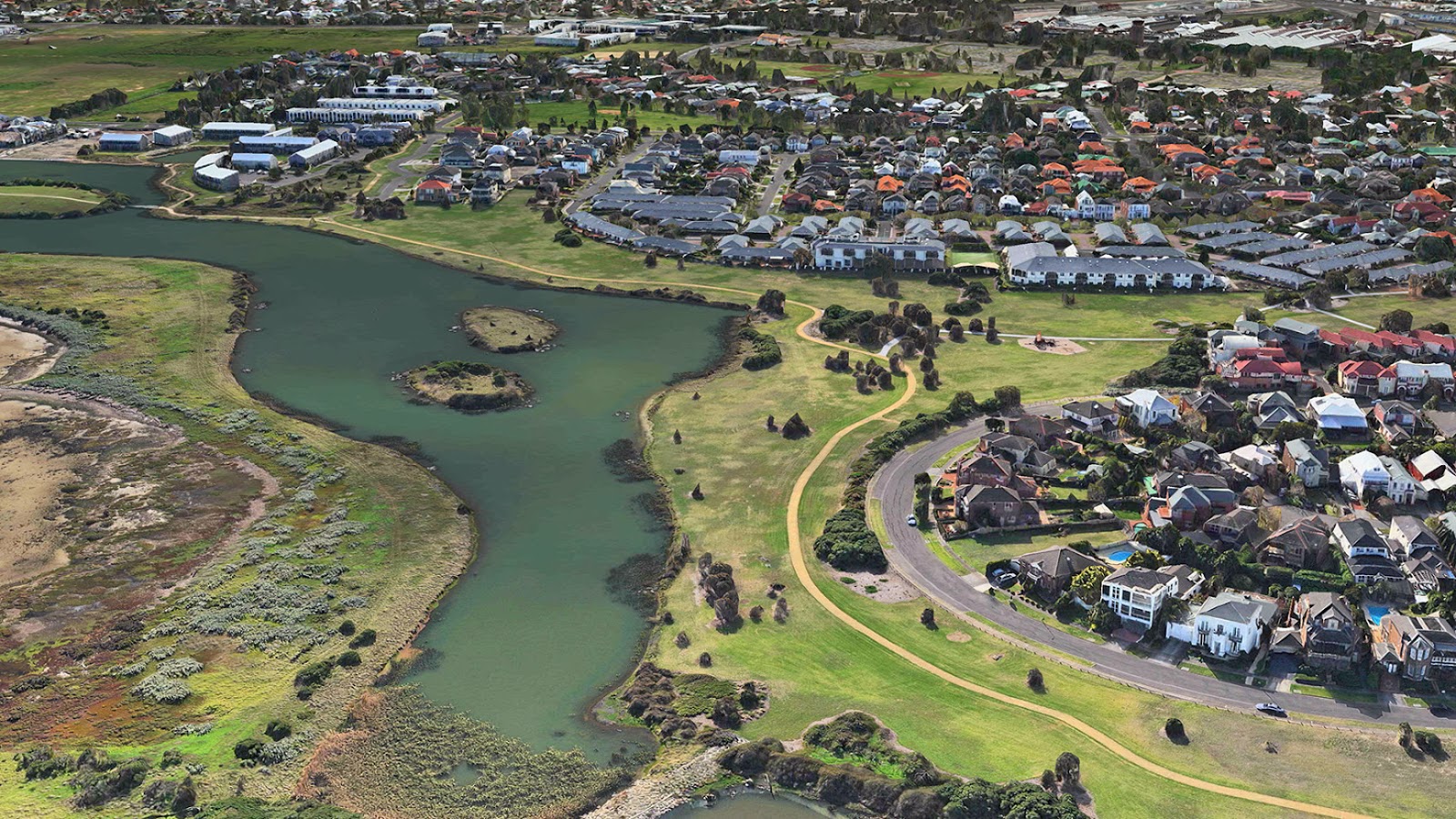
WETLANDS

The Cheetham and Altona Important Bird Area comprises several wetland sites on, or close to, the north-western coast of Port Phillip in Victoria, south-eastern Australia. Collectively they total 1223 ha in area and lie within, or adjacent to, the western suburbs of the city of Melbourne. They were classified as an Important Bird Area (IBA) because they support more than 1% of the world populations of Red-necked Stint, Chestnut Teal and Pacific Gull.

The IBA includes the undeveloped coast between Williamstown and Seaholme, including the Jawbone Reserve, Altona Coastal Park, Rowden's Swamp, the Cheetham Wetlands, Truganina Swamp, with the Spectacle Lakes complex and RAAF Lake of Point Cook Coastal Park. These contain all the remaining freshwater wetlands, saltpans, intertidal mudflats and shallow inshore waters which support the key bird species.

This post is part of the Wordless Wednesday meme,
and also part of the ABC Wednesday meme,
and also part of the Nature Notes meme.


Wednesday, 8 May 2019

RUBBISH

Rubbish is any waste material; refuse or litter and unfortunately, it is a huge problem on our planet right now as the population increases and as our society has transformed into a "single-use and throw away" society. We are the only creatures in the history of our planet that creates rubbish that is not readily returned to our environment. In fact it, our rubbish actually harms our environment, affecting both the plants and animals that live there, and us.

Rubbish causes three main types of pollution: Air pollution, Water pollution and Land pollution. We send more and more rubbish "away" to landfill every year. Unfortunately, there is no "away", everything ends up somewhere and we are all responsible. And the bad news is that just about everything we do can cause pollution. The good news is that in most cases, there are relatively easy ways to reduce or even stop the pollution.

The three R’s – REDUCE, REUSE and RECYCLE – all help to cut down on the amount of rubbish we throw away. They conserve natural resources, landfill space and energy. Plus, the three R’s save land and money communities must use to dispose of waste in landfills. Siting a new landfill has become difficult and more expensive due to environmental regulations and public opposition.

We should also add a fourth R to this: REFUSE! Refuse to buy items that are non-recyclable, harmful to the environment, or made by manufacturers who are using methods that are harmful to the environment.

This post is part of the Wordless Wednesday meme,
and also part of the ABC Wednesday meme,
and also part of the Nature Notes meme.

Sunday, 9 September 2018

FURRY

The quokka (Setonix brachyurus), the only member of the genus Setonix, is a small macropod about the size of a domestic cat. Like other marsupials in the macropod family (such as kangaroos and wallabies), the quokka is herbivorous and mainly nocturnal. 

Quokkas can be found on some smaller islands off the coast of Western Australia, in particular on Rottnest Island just off Perth and Bald Island near Albany. A small mainland colony exists in the protected area of Two Peoples Bay Nature Reserve, where they co-exist with the critically endangered Gilbert's potoroo.

This post is part of the My Sunday Best meme,
and also part of the My Sunday Photo meme,
and also part of the Photo Sunday meme,
and also part of the Saturday Critters meme.