This post is part of the Wordless Wednesday meme,
and also part of the My Corner of the World meme,
Showing posts with label Nature_Notes. Show all posts
Showing posts with label Nature_Notes. Show all posts
Wednesday, 15 December 2021


Wednesday, 16 June 2021
ROSE HIPS
Winter is with us and most roses have finished flowering. Rose hips are a welcome dash of colour.

This post is part of the Wordless Wednesday meme,
and also part of the My Corner of the World meme,
and also part of the My Corner of the World meme,
and also part of the Nature Notes meme.

Wednesday, 11 November 2020
YOUNG & OLD
This post is part of the Wordless Wednesday meme,
and also part of the My Corner of the World meme,
and also part of the Nature Notes meme.

and also part of the My Corner of the World meme,
and also part of the Nature Notes meme.

Wednesday, 4 November 2020
TREES

Wednesday, 7 October 2020
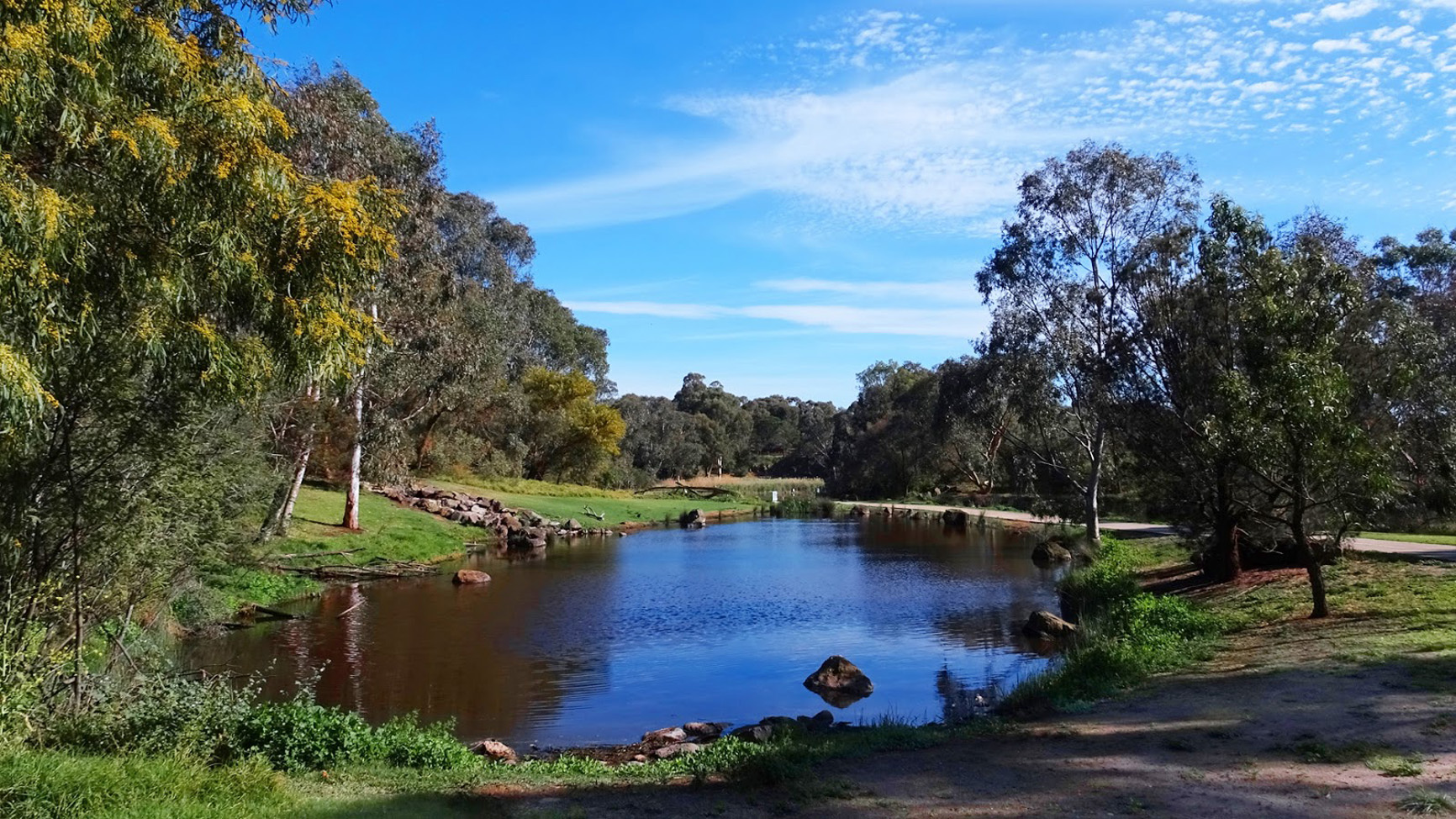
SPRING MORNING
In the Darebin Parklands, suburban Melbourne.
This post is part of the Wordless Wednesday meme,
and also part of the My Corner of the World meme,
and also part of the Nature Notes meme.
Monday, 24 August 2020
CALENDULAS
This post is part of the Mosaic Monday meme,
and also part of the Seasons meme,
and also part of the My Corner of the World meme,
and also part of the Nature Notes meme.

and also part of the Seasons meme,
and also part of the My Corner of the World meme,
and also part of the Nature Notes meme.

Wednesday, 1 July 2020
DEWDROPS
This post is part of the Wordless Wednesday meme,
and also part of the My Corner of the World meme,
and also part of the Nature Notes meme.

and also part of the My Corner of the World meme,
and also part of the Nature Notes meme.

Wednesday, 30 October 2019
QUAIL
The buff-breasted buttonquail (Turnix olivii) is the largest and possibly the rarest of the buttonquail. This species is endemic to Cape York Peninsula, in Queensland, Australia.
The buff-breasted buttonquail measures from 18–23 cm and usually weighs over 110 g. Both the tail and wings are short. The back is chestnut. The sides of the head are marked with chestnut on an otherwise plain grey head; while the breast is warm buff-coloured. The painted buttonquail and the brown quail both coexist with this species. The buff-breasted is larger (and longer-legged) than either and is quite different from the all-dark quail. The painted species is almost totally mottled, with bold white spotting on the breast and no warm buff coloration.
The most similar species to the buff-breasted is the chestnut-backed buttonquail, which does not overlap in the wild. The advertising (or booming) call made by the female is ooom-oom-oom, repeated up to 20 times. The notes are almost inaudible initially, then become gradually louder, higher-pitched and shorter until they are far-carrying. The males will respond with a deep, rapid chu-chu-chu whistle. Other calls, perhaps in reaction to danger, include gug-gug-gug, a soft chirp-chirp-chirp and a loud kwaare-kwaare.
The buff-breasted buttonquail is an endangered species, with a population estimated at 500 individuals and a historical range of 2,070 km2. They have been extirpated from large portions of their original range, probably due in part due to cattle overgrazing, sites made unsuitable by fire regimes and general habitat clearances to make way for human habitation. Very few people see the buff-breasted buttonquail due partially to its tiny range and also due to its inconspicuous disposition. They usually walk or run in areas where they are well camouflaged, almost never leaving the ground except when absolutely needed. They reside in the same areas usually, but local movements have been recorded, probably in response to seasonal habitat changes.
This post is part of the Wordless Wednesday meme,

Wednesday, 23 October 2019
PIGEONS
The native Crested Pigeon (Ocyphaps lophotes) is a common bird found widely throughout mainland Australia except for the far northern tropical areas. Only two Australian pigeon species possess an erect crest, the crested pigeon and the spinifex pigeon. The crested pigeon is the larger of the two species, shown here in the Darebin Parklands, a nature reserve in suburban Melbourne.
This post is part of the Wordless Wednesday meme,
and also part of the ABC Wednesday meme.
and also part of the Nature Notes meme.


Wednesday, 25 September 2019
LEAF
Spring is the time of new growth and green is the colour that predominates in the young burgeoning foliage, especially vivid as the sun shines through it.
This post is part of the Wordless Wednesday meme,
and also part of the ABC Wednesday meme,
and also part of the Nature Notes meme.

This post is part of the Wordless Wednesday meme,
and also part of the ABC Wednesday meme,
and also part of the Nature Notes meme.

Wednesday, 11 September 2019
JELLYFISH
Jellyfish and sea jellies are the informal common names given to the medusa-phase of certain gelatinous members of the subphylum Medusozoa, a major part of the phylum Cnidaria. Jellyfish are mainly free-swimming marine animals with umbrella-shaped bells and trailing tentacles, although a few are not mobile, being anchored to the seabed by stalks. The bell can pulsate to provide propulsion and highly efficient locomotion. The tentacles are armed with stinging cells and may be used to capture prey and defend against predators. Jellyfish have a complex life cycle; the medusa is normally the sexual phase, the planula larva can disperse widely and is followed by a sedentary polyp phase.
This post is part of the Wordless Wednesday meme,
and also part of the ABC Wednesday meme,
and also part of the Nature Notes meme.

Wednesday, 28 August 2019
HEMLOCK
Conium maculatum (hemlock or poison hemlock) is a highly poisonous biennial herbaceous flowering plant in the carrot family Apiaceae, native to Europe and North Africa. It is a herbaceous biennial plant that grows to 1.5–2.5 m, with a smooth, green, hollow stem, usually spotted or streaked with red or purple on the lower half of the stem. All parts of the plant are hairless (glabrous).
The leaves are two- to four-pinnate, finely divided and lacy, overall triangular in shape, up to 50 cm long and 40 cm broad. The flowers are small, white, clustered in umbels up to 10–15 cm across. When crushed, the leaves and root emit a rank, unpleasant odour often compared to that of parsnips. It produces a large number of seeds that allow the plant to form thick stands in modified soils. The toxicity of the plant has inspired many of its common names: In addition to the English poison hemlock, the Australian Carrot Fern, and the Irish devil's bread or devil's porridge, poison parsley, spotted corobane, and spotted hemlock are used.
Eight piperidinic alkaloids have been identified in C. maculatum. Two of them, gamma-coniceine and coniine, are generally the most abundant, and they account for most of the plant's acute and chronic toxicity. Due to high potency, the ingestion of seemingly small doses can easily result in respiratory collapse and death. Coniine causes death by blocking the neuromuscular junction in a manner similar to curare; this results in an ascending muscular paralysis with eventual paralysis of the respiratory muscles which results in death due to lack of oxygen to the heart and brain. Death can be prevented by artificial ventilation until the effects have worn off 48–72 hours later. For an adult, the ingestion of more than 100 mg (0.1 gram) of coniine (about six to eight fresh leaves, or a smaller dose of the seeds or root) may be fatal.
In ancient Greece, hemlock was used to poison condemned prisoners. The most famous victim of hemlock poisoning is the philosopher Socrates. After being condemned to death for impiety and corrupting the young men of Athens, in 399 BC, Socrates was given a potent infusion of the hemlock plant. Plato described Socrates' death in 'Phaedo'.
This post is part of the Wordless Wednesday meme,
and also part of the ABC Wednesday meme,
and also part of the Nature Notes meme.


 |
| The Death of Socrates (French: La Mort de Socrate) is an oil on canvas painted by French painter Jacques-Louis David in 1787. The painting focuses on a classical subject like many of his works from that decade, in this case the story of the execution of Socrates as told by Plato in his Phaedo. In this episode, Socrates has been convicted of corrupting the youth of Athens and introducing strange gods, and has been sentenced to die by drinking poison hemlock. Socrates uses his death as a final lesson for his pupils rather than fleeing when the opportunity arises, and faces it calmly |
Wednesday, 14 August 2019
FRUIT SALAD
Fruit Salad
Ingredients
1 punnet of ripe strawberries
1 orange
1 honey Murcott mandarin
2 kiwi fruit
1 large, ripe pear
Juice of an orange
Juice of a lemon
2 tbsp raw sugar (or honey) – optional, but advisable as the fruit can be quite sour
1 tbsp of orange liqueur (Cointreau, Grand Marnier, Curaçao or Triple Sec)
Method
Hull the strawberries and cut them in quarters. Peel the orange, removing the rind and pith, leaving the exposed flesh. Cut into small pieces removing the core and seeds in the process. Do likewise for the mandarin.
Peel the kiwi fruit and cut into slices and then quarter them. Peel the pear and cut into small pieces. Mix all fruit together in the bowl.
Dissolve the sugar (or honey) in the mixed citrus juices and add the liqueur. Pour over the fruit in the bowl and chill the fruit salad.
This post is part of the Wordless Wednesday meme,
and also part of the ABC Wednesday meme,
and also part of the Nature Notes meme.

Wednesday, 7 August 2019
ENVIRONMENT
Environment | ɪnˈvʌɪrənm(ə)nt, ɛnˈvʌɪrənm(ə)nt | noun
1 The surroundings or conditions in which a person, animal, or plant lives or operates: Survival in an often hostile environment.
• [usually with modifier] The setting or conditions in which a particular activity is carried on: A good learning environment.
• [with modifier] Computing the overall structure within which a user, computer, or program operates: A desktop development environment.
2 (The environment) The natural world, as a whole or in a particular geographical area, especially as affected by human activity: The impact of pesticides on the environment | [as modifier] : A parliamentary environment committee.
The Darebin Parklands in Melbourne is a nature reserve where the natural environment has been more or less preserved and maintained around the Darebin Creek. This beautiful nature reserve is about 10 minutes walk from our house, so we frequently visit it.
This post is part of the Wordless Wednesday meme,
and also part of the ABC Wednesday meme,
and also part of the Nature Notes meme.

1 The surroundings or conditions in which a person, animal, or plant lives or operates: Survival in an often hostile environment.
• [usually with modifier] The setting or conditions in which a particular activity is carried on: A good learning environment.
• [with modifier] Computing the overall structure within which a user, computer, or program operates: A desktop development environment.
2 (The environment) The natural world, as a whole or in a particular geographical area, especially as affected by human activity: The impact of pesticides on the environment | [as modifier] : A parliamentary environment committee.
The Darebin Parklands in Melbourne is a nature reserve where the natural environment has been more or less preserved and maintained around the Darebin Creek. This beautiful nature reserve is about 10 minutes walk from our house, so we frequently visit it.
This post is part of the Wordless Wednesday meme,
and also part of the ABC Wednesday meme,
and also part of the Nature Notes meme.

Wednesday, 26 June 2019
YARROW
Achillea millefolium, commonly known as yarrow or common yarrow, is a flowering plant in the family Asteraceae. It is native to temperate regions of the Northern Hemisphere in Asia, Europe, and North America. It has been introduced as a feed for live stock in places like New Zealand and Australia. However, it is a weed in those places and sometimes also in its native regions.
In New Mexico and southern Colorado, it is called plumajillo (Spanish for 'little feather') from its leaf shape and texture. In antiquity, yarrow was known as herba militaris, for its use in stanching the flow of blood from wounds. Other common names for this species include gordaldo, nosebleed plant, old man's pepper, devil's nettle, sanguinary, milfoil, soldier's woundwort, thousand-leaf, and thousand-seal.
This post is part of the Wordless Wednesday meme,
and also part of the ABC Wednesday meme,
and also part of the Nature Notes meme.

Wednesday, 12 June 2019
WETLANDS
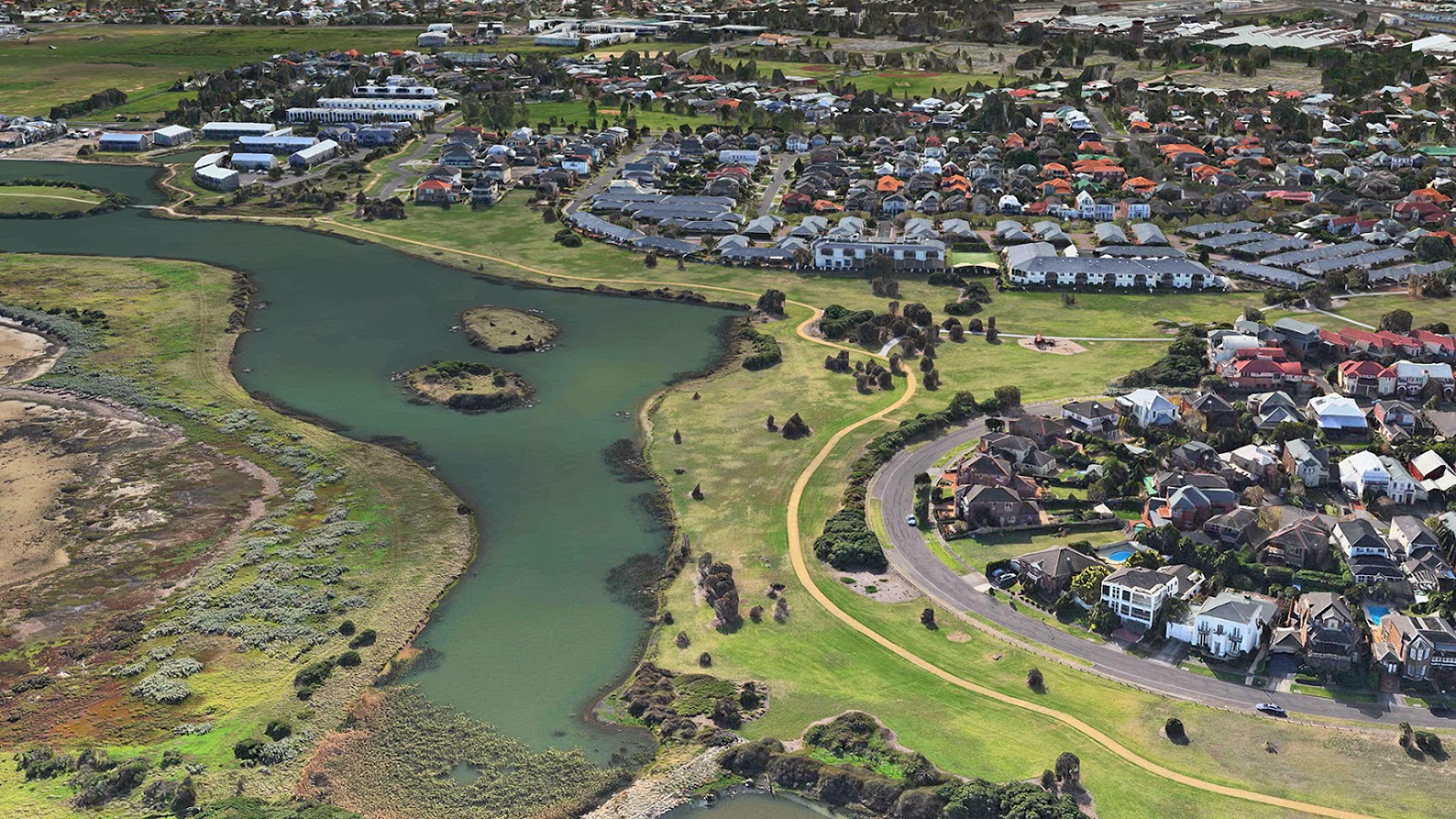
The Cheetham and Altona Important Bird Area comprises several wetland sites on, or close to, the north-western coast of Port Phillip in Victoria, south-eastern Australia. Collectively they total 1223 ha in area and lie within, or adjacent to, the western suburbs of the city of Melbourne. They were classified as an Important Bird Area (IBA) because they support more than 1% of the world populations of Red-necked Stint, Chestnut Teal and Pacific Gull.
The IBA includes the undeveloped coast between Williamstown and Seaholme, including the Jawbone Reserve, Altona Coastal Park, Rowden's Swamp, the Cheetham Wetlands, Truganina Swamp, with the Spectacle Lakes complex and RAAF Lake of Point Cook Coastal Park. These contain all the remaining freshwater wetlands, saltpans, intertidal mudflats and shallow inshore waters which support the key bird species.
This post is part of the Wordless Wednesday meme,
and also part of the ABC Wednesday meme,
and also part of the Nature Notes meme.


Wednesday, 5 June 2019
VIETNAM
Vietnam (Vietnamese: Việt Nam, officially the Socialist Republic of Vietnam (Vietnamese: Cộng hòa xã hội chủ nghĩa Việt Nam), is the easternmost country on the Indochina Peninsula. With an estimated 94.6 million inhabitants as of 2016, it is the 15th most populous country in the world. Vietnam is bordered by China to the north, Laos and Cambodia to the west, part of Thailand to the southwest, and the Philippines, Malaysia, and Indonesia across the South China Sea to the east and southeast. Its capital city has been Hanoi since the reunification of North and South Vietnam in 1976, while its most populous city is Ho Chi Minh City.
During the 3rd century BC, ancient Vietnamese people inhabited modern-day northern Vietnam and established the state of Âu Lạc. The independent state was annexed by Nam Việt in 179 BC. Nam Việt was subsequently annexed by the Han Empire and became part of Imperial China for over a millennium from 111 BC to 939 AD. An independent Vietnamese state emerged in 939 following Vietnamese victory in the battle of Bạch Đằng against the Southern Han. Successive Vietnamese imperial dynasties flourished as the nation expanded geographically and politically into Southeast Asia until the Indochina Peninsula was colonised by the French in the mid-19th century. French Indochina saw the Japanese occupation in 1940 amidst the escalation of World War II. Following Japanese defeat in 1945, the Vietnamese fought French rule in the First Indochina War.
On 2 September 1945, Vietnamese revolutionary leader Hồ Chí Minh declared Vietnam's independence from France and therefrom established a provisional communist state. After nine years of war, the Vietnamese declared victory in the decisive battle of Điện Biên Phủ in 1954. The nation was thereafter divided into two rival states, communist North—the Democratic Republic of Vietnam, and anti-communist South—the Republic of Vietnam. Conflicts intensified in the Vietnam War with extensive US intervention in support of South Vietnam from 1965 to 1973. The war ended with North Vietnamese victory in 1975.
North and South Vietnam were then reunified under a communist government in 1976. The newly established country remained impoverished and politically isolated until 1986 when the Communist Party initiated a series of economic and political reforms that facilitated Vietnamese integration into the world economy. By 2010, Vietnam had established diplomatic relations with 178 countries. Since 2000, Vietnam's GDP growth rate has been among the highest in the world. Its successful economic reforms resulted in its joining the WTO in 2007. Vietnam is also a member of the Association of Southeast Asian Nations (ASEAN), Asia-Pacific Economic Cooperation (APEC) and the Organisation Internationale de la Francophonie (OIF).
This post is part of the Wordless Wednesday meme,
and also part of the ABC Wednesday meme,
and also part of the Nature Notes meme.

Wednesday, 15 May 2019
SUMMER SALAD
As we progress towards Winter, one thing I'll miss is the Summer produce from our vegetable garden - ripe red flavoursome tomatoes, crisp cucumbers, fresh herbs, Spring onions... This is a salad we enjoy in the summertime.
Ingredients (for 2 persons)
3 ripe beefsteak tomatoes
2 Lebanese (i.e. baby) cucumbers
4-5 sprigs of fresh purslane
2-3 sprigs of parsley
1-2 sprigs of fresh thyme
1 large fresh Spring onion
1 tbsp baby capers
A pinch or two of dried oregano
Salt, pepper to taste
70 g of blue vein cheese
Vinaigrette Dressing
2 tbsp olive oil
1 tbsp wine vinegar
1 tsp Italian “balsamico” vinegar
Method
Cut and slice the tomatoes and put in a salad bowl. Peel and slice the cucumbers on top of it. Pluck the tender leaves of the purslane and add to salad. Chop up the parsley and thyme and add to salad.Add the chopped Spring onion and capers. Add the oregano, salt and pepper. Dress with the vinaigrette, tossing thoroughly, and add the cheese cut in small cubes.
This post is part of the Wordless Wednesday meme,
and also part of the ABC Wednesday meme,
and also part of the Nature Notes meme.

Wednesday, 8 May 2019
RUBBISH
Rubbish is any waste material; refuse or litter and unfortunately, it is a huge problem on our planet right now as the population increases and as our society has transformed into a "single-use and throw away" society. We are the only creatures in the history of our planet that creates rubbish that is not readily returned to our environment. In fact it, our rubbish actually harms our environment, affecting both the plants and animals that live there, and us.
Rubbish causes three main types of pollution: Air pollution, Water pollution and Land pollution. We send more and more rubbish "away" to landfill every year. Unfortunately, there is no "away", everything ends up somewhere and we are all responsible. And the bad news is that just about everything we do can cause pollution. The good news is that in most cases, there are relatively easy ways to reduce or even stop the pollution.
The three R’s – REDUCE, REUSE and RECYCLE – all help to cut down on the amount of rubbish we throw away. They conserve natural resources, landfill space and energy. Plus, the three R’s save land and money communities must use to dispose of waste in landfills. Siting a new landfill has become difficult and more expensive due to environmental regulations and public opposition.
We should also add a fourth R to this: REFUSE! Refuse to buy items that are non-recyclable, harmful to the environment, or made by manufacturers who are using methods that are harmful to the environment.
This post is part of the Wordless Wednesday meme,
and also part of the ABC Wednesday meme,
and also part of the Nature Notes meme.

Wednesday, 1 May 2019
QUARTZ
Quartz is a mineral composed of silicon and oxygen atoms in a continuous framework of SiO4 silicon–oxygen tetrahedra, with each oxygen being shared between two tetrahedra, giving an overall chemical formula of SiO2. Quartz is the second most abundant mineral in Earth's continental crust, behind feldspar.
Quartz crystals are chiral, and exist in two forms, the normal α-quartz and the high-temperature β-quartz. The transformation from α-quartz to β-quartz takes place abruptly at 573 °C (846 K). Since the transformation is accompanied by a significant change in volume, it can easily induce fracturing of ceramics or rocks passing through this temperature limit.
There are many different varieties of quartz, several of which are semi-precious gemstones. Since antiquity, varieties of quartz have been the most commonly used minerals in the making of jewellery and hardstone carvings, especially in Eurasia.
This post is part of the Wordless Wednesday meme,
and also part of the ABC Wednesday meme,
and also part of the Nature Notes meme.

Subscribe to:
Posts (Atom)